
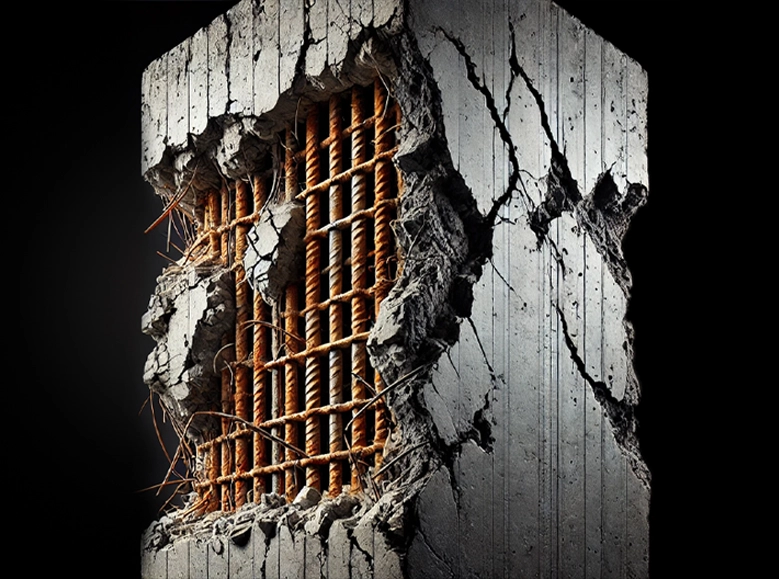
Reinforced-concrete jetties face deterioration and loss of strength over time because of the marine environment and reinforcement corrosion. Their stability and strength need ongoing attention. Concrete alkalinity provides inherent protection, but even small quantities of chloride, abundant in the surrounding environment, can disrupt it and cause unexpected corrosion.
Extensive reinforcement corrosion weakens concrete and ultimately damages it. Cathodic protection is widely applicable to prevent corrosion in new jetties and stop it in existing ones. It can cover both decks and concrete piles, normally using sacrificial anodes or impressed current. Selection depends on facilities, constraints, calculations and design experience.
Selection Criteria for Reinforced Concrete Jetty Cathodic Protection
| Protection method | Sacrificial anodes | Impressed current |
| Electrical supply required | No | Yes |
| Typical protection life | Maximum 10 years | Minimum 20 years, extendable to 100 years |
| Potential current interference and harmful effects on adjacent structures | None | Present depending on groundbed type |
| Common anode types | Aluminium | High-silicon cast iron |
| Zinc | Mixed metal oxide MMO | |
| Magnesium | Platinised | |
| Most widely used anode | Zinc, because of more uniform corrosion and lower cost | MMO, because of easier installation and lower cost |
Impressed current systems use tubular MMO anodes and, according to conditions, ribbon, mesh ribbon and mesh forms. Anodes can be fitted externally after construction, embedded during concrete placement or installed in remote groundbeds. For new structures, installation during construction is generally recommended where access permits.
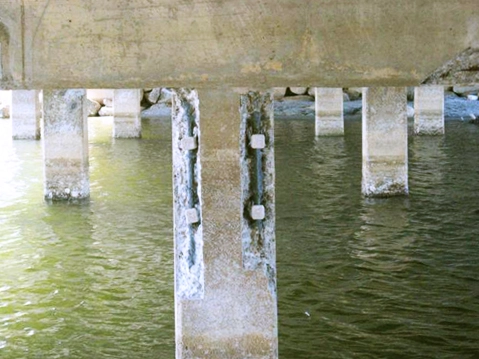
Zinc sacrificial anode installation on reinforced-concrete jetty piles
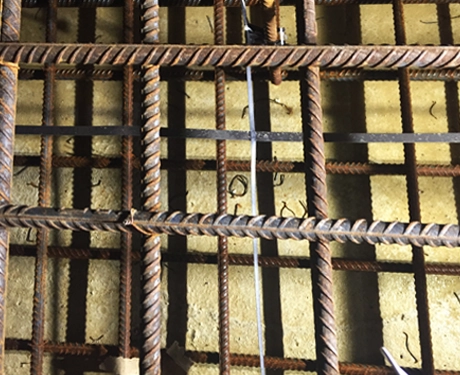
MMO ribbon anode installation for impressed current protection of reinforced-concrete jetty piles
With more than 30 years of distinguished cathodic protection experience, Borna Electronic provides design, equipment supply, consultancy and installation for existing reinforced-concrete jetties to stop corrosion and restore the structure, or for new jetties to prevent corrosion, together with monitoring systems.