
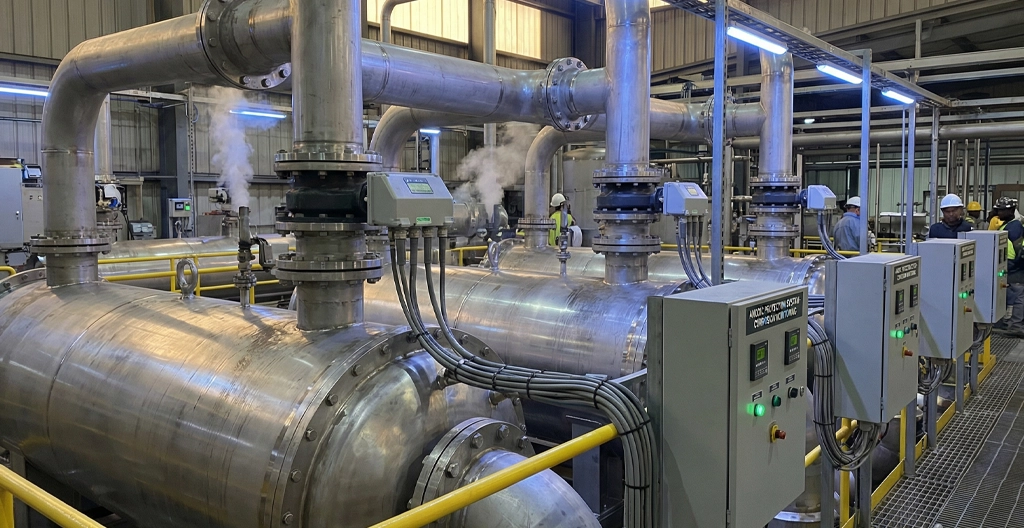
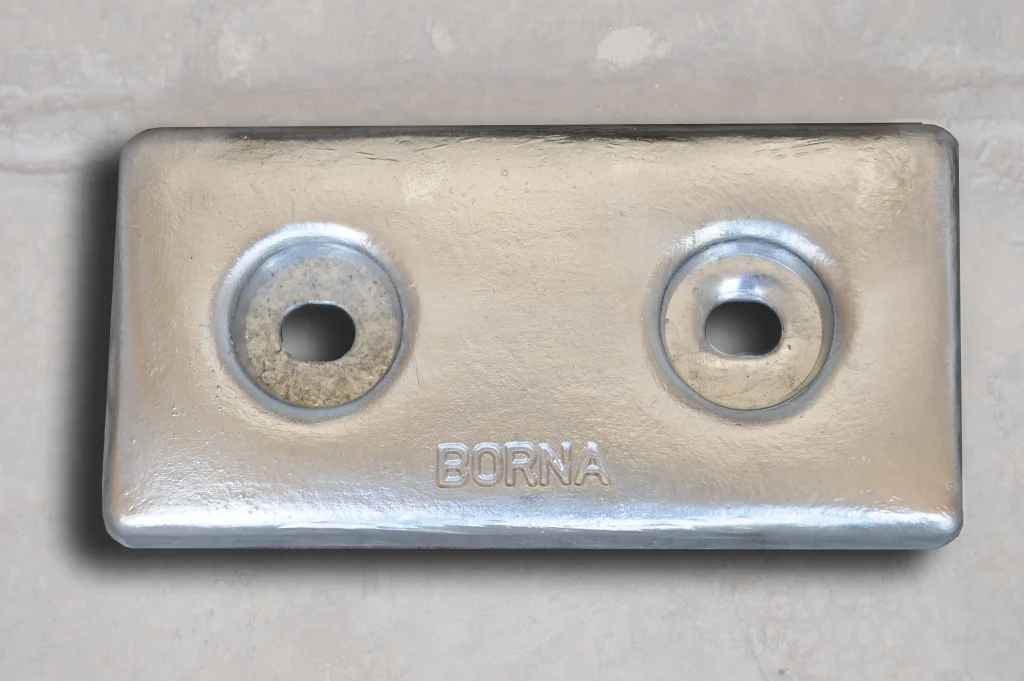
Heat exchangers, boilers and condensers are essential equipment in power, refinery and petrochemical industries. High operating pressures and temperatures make them susceptible to corrosion. Corrosion of individual components has often caused failure of the whole unit and production cycle, making protection essential. Cathodic protection is used as a standalone method. Sacrificial anodes are generally preferred because they require no electrical supply and are easy to install. Magnesium or zinc anodes are normally used; magnesium is more common because of its higher current capacity and lack of operating-temperature limitations.
Zinc anode limitations arise from the relative potential between iron, the cathode, and zinc, the anode, which decreases as temperature rises. In some waters above 50 °C, their polarity reverses: zinc becomes more cathodic than iron and accelerates its corrosion instead of protecting it sacrificially. Zinc must therefore not be used to protect iron in heat exchangers, boilers or condensers operating above 60 °C.
Cathodic Protection of Heat Exchangers Boilers and Condensers
With more than 30 years of distinguished cathodic protection experience, Borna Electronic provides design, equipment supply, consultancy and installation of systems for heat exchangers, boilers and condensers, together with cathodic protection monitoring.