
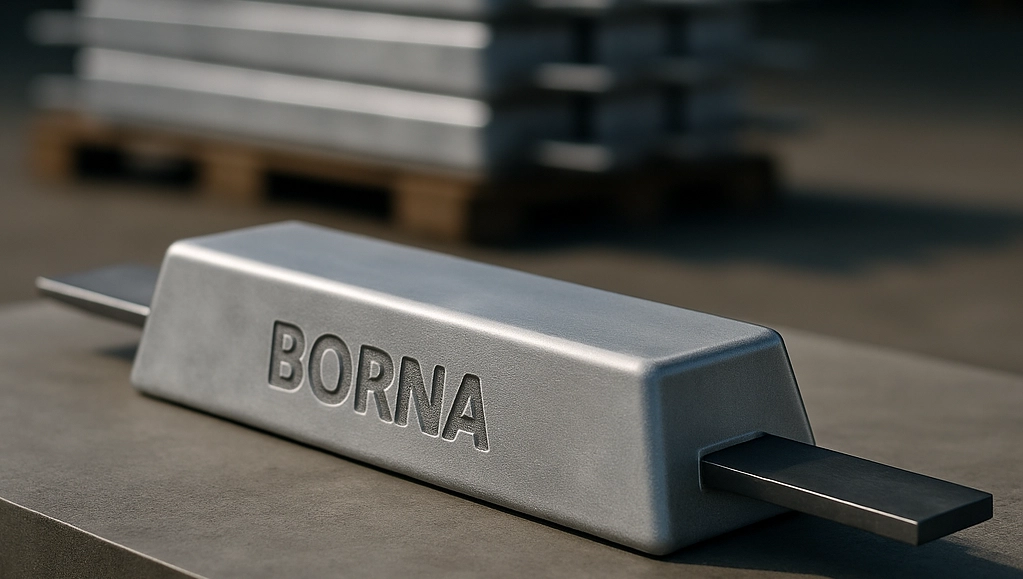
Aluminium anodes are mainly used for cathodic protection in seawater, although they can occasionally be used in fresh water or soil. Principal applications include cathodic protection of jetty piles and jackets, internal protection of storage tanks and external protection of seabed pipelines. An activating element such as mercury or indium is usually added to aluminium anodes to prevent a passive aluminium oxide layer forming on the surface and sharply reducing anode performance. Mercury was used in aluminium anode alloys in the past. Although the amount was small, mercury remained as the main anode body was consumed, increasing its concentration and causing substantial environmental problems. Mercury use in aluminium anodes is now almost obsolete, and indium is used as the activator.

An offshore jacket fitted with aluminium anodes manufactured by Borna Electronic
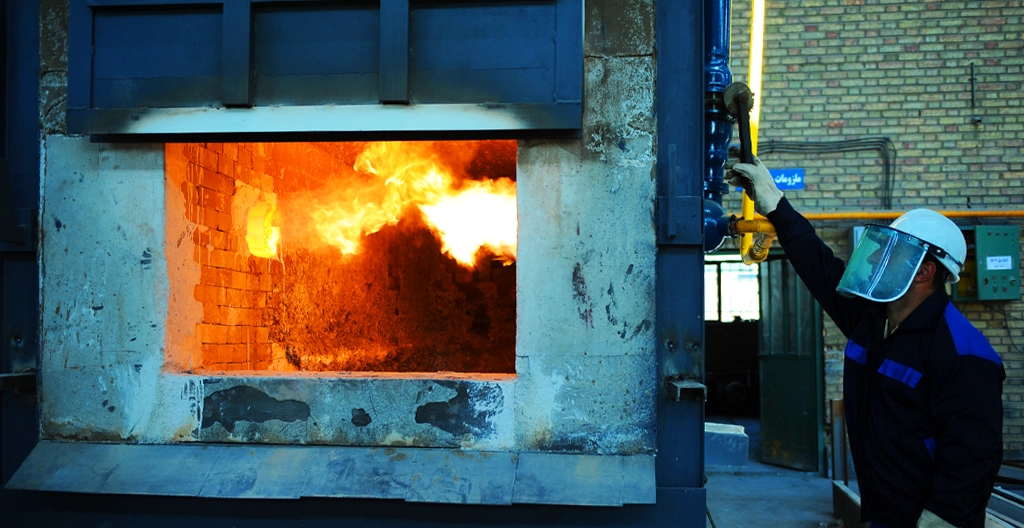
Borna Electronic aluminium anode casting furnace
Common aluminium anode standards include DIN VG 81257, DNV-RP-B401, IPS-M-TP-750, ISO 15589-2, INSO 12994-2, NACE SP0387, NORSOK M-503 and MIL-DTL-24779B. NACE SP0387 specifies a mild-steel insert for aluminium anodes.
Borna Electronic can design and manufacture aluminium anodes to meet customer requirements or project needs.